Discotech Nightlife
- 4.9
- Rating
- 100.00K
- Installs
- Free
- Price

 Analysis by App-foxy
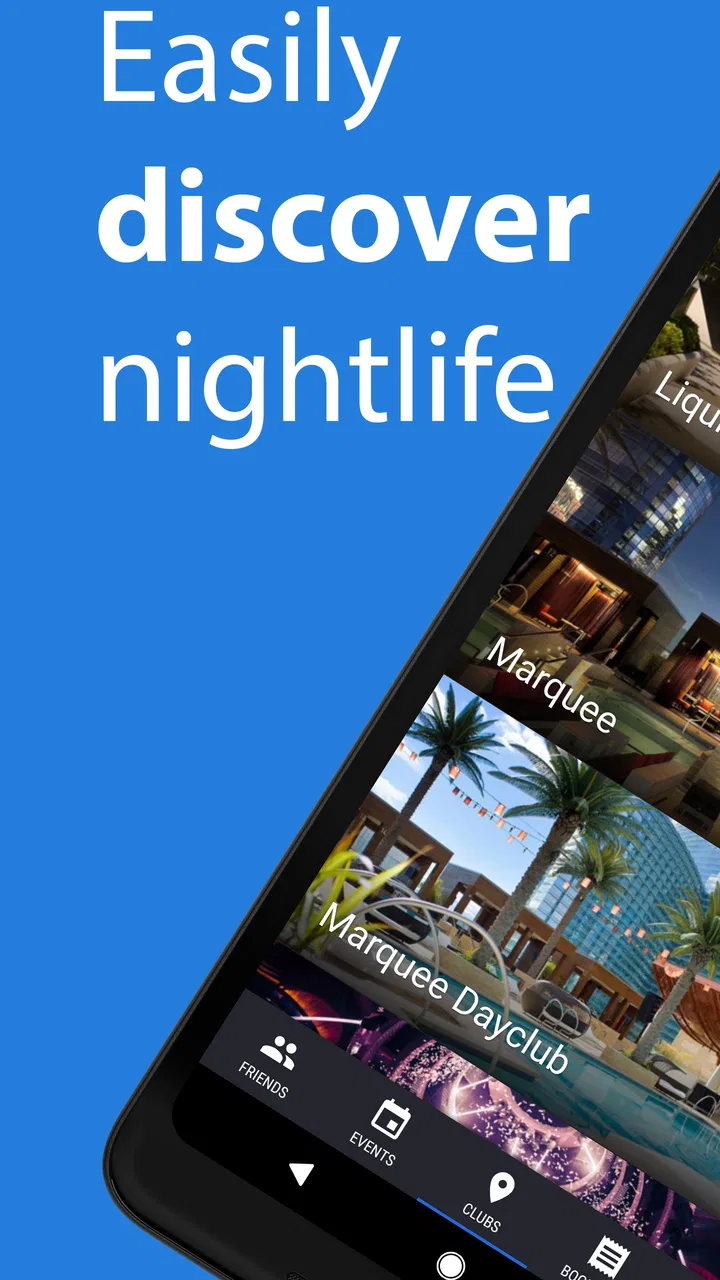
When I use Discotech Nightlife, I see it less as a general event calendar and more as a practical way to turn a night out into a plan. Its main value is bringing club events, festivals, discounted tickets, guest-list options, and VIP table information into one nightlife-focused app. That focus matters because choosing a venue is often only the first step; finding the right ticket or entry option can take just as much effort.
The app is free, aimed at an Everyone audience, and developed by Discotech, Inc. It has been available since Apr 24, 2014, and its current version is 8.2.5. With an average rating of 4.9 from around 2K ratings and more than 100K installs, it has clearly found an audience among people who regularly look for organized nights out rather than discovering events by chance.
Why the ticket and entry focus makes a difference
The most useful capability here is the way the app connects nightlife discovery with entry choices. A normal event search can tell me that a club night exists, but that alone does not answer the practical questions I have before leaving home: Is there a discounted ticket? Is a guest list available? Would a VIP table make sense for a group? Discotech Nightlife puts those decisions closer to the event itself.
You May Also Like

 Blood Strike: 2.5 Anniversary
Blood Strike’s Loadouts Turn Every Drop Into a Tactical Gamble
A close look at Blood Strike’s custom loadouts: how fast access to signature weapons reshapes its battle royale rhythm, rewards preparation, and narrows the gap between fights.

 Pandora - Music & Podcasts
Pandora’s Music Is Easy to Start, but Harder to Recover
Pandora’s strength is its low-effort path from a seed to a station. Its weak spot is how much confidence it asks you to place in connection, setup, and quiet recovery.

 8 Ball Pool
 Is Built on Rivalries, Rematches, and Routine
A close look at the rivalries, rematches, shared routines, and unanswered safety questions that turn a quick pool match into a persistent mobile community.

 Samsung Music
’s Quiet Strength Is Playing What You Already Own
Its reach comes less from spectacle than from dependable access to a personal library. That simplicity is both the app’s strongest retention engine and its ceiling.

 AccuWeather: Weather Radar
AccuWeather Review: A Quick, Clear Forecast for Everyday Decisions
For everyday plans, the best forecast is the one you can understand quickly. AccuWeather makes rain timing, radar, and local conditions easy to act on, with a few trade-offs.

 Hill Climb Racing
Why Hill Climb Racing Still Turns Crashes Into One More Run
A tiny car, a bumpy hill and one more upgrade: Hill Climb Racing keeps resurfacing because its simple chaos makes every near-miss feel personal.
More From Our News Desk



That approach changes how I plan. Instead of opening a social network to search for a venue, checking a separate ticketing service, and then trying to understand whether a guest list is still relevant, I can begin with a nightlife-specific destination. The benefit is not simply convenience. It reduces the chance of choosing an event first and discovering later that the available entry option does not suit my budget or group.
I also like that the app covers both ordinary ticket seekers and people considering a more organized night. A discounted ticket is useful for someone going alone or with one friend, while guest-list information can be more attractive when arrival timing matters. VIP table details serve a different kind of outing altogether. These options are not interchangeable, and seeing them in the same nightlife context makes it easier to compare the type of evening I actually want.
In my experience, the strongest reason to use it is not that it replaces every other way of finding events. It is that it gives entry planning a central role. For nightlife, that is a sensible priority. A venue can look appealing in a post or message, but the experience becomes much smoother when the route from discovery to admission is clear.
How I use it before committing to a night out
I would start by treating the app as a planning tool rather than something to browse aimlessly. I look for the kind of event I want, then pay attention to the entry route attached to it. If I am trying to keep spending under control, the discounted-ticket option becomes the first thing I evaluate. If I am joining a larger group, I compare that with guest-list or table possibilities instead of assuming the cheapest visible choice is automatically the best one.
A useful habit is to decide the group’s priorities before selecting an option. For example, a group may care more about predictable entry than about the lowest possible cost. Another group may prefer flexibility and be comfortable with a guest list. Discotech Nightlife is more helpful when I make that decision deliberately, because its different nightlife pathways address different kinds of plans.
I would also use it earlier in the day, not only while standing outside a venue. Checking options in advance gives me time to discuss the choice with friends and avoid the familiar problem where everyone assumes somebody else handled admission. The app’s value is highest when it prevents that last-minute uncertainty.
One non-obvious advantage is that it can help a group assign responsibility. One person can investigate the event, another can compare the available entry style, and the group can agree before anyone pays or travels. That sounds simple, but nightlife plans often fail because information is scattered across messages, social posts, and separate ticket pages. A single event-focused starting point makes the conversation easier.
I would still read every event detail carefully before relying on an option. A guest list is not something I would casually treat as identical to a paid ticket, and a VIP table is a group decision rather than an impulse purchase. The app can bring these possibilities together, but I still need to match the option to the actual plan.
A realistic evening where it earns its place
Imagine that I am visiting a city for a weekend with three friends. We want a club night, but we do not all have the same budget, and nobody wants to spend the evening moving between venues. I can use Discotech Nightlife to narrow the search to nightlife events, then compare whether a discounted ticket, guest-list route, or table arrangement fits the group.
For this situation, the app is useful before we leave the hotel. We can settle on one event, agree on how we want to enter, and avoid making a decision based only on whichever venue appears first in a general search. If the group chooses a ticket, the plan is straightforward. If we consider a guest list, we can discuss whether the timing and conditions suit everyone. If we are celebrating and want a table, the app gives that possibility a place in the same planning process.
The important effect is coordination. I am not claiming that an app can remove every uncertainty from nightlife, but it can reduce the number of separate decisions a group has to make in different places. That is particularly helpful when one friend wants to save money, another wants a more comfortable experience, and everyone still wants to stay together.
It is also useful for a person who dislikes spontaneous venue-hopping. Rather than relying on a crowd outside a club or a recommendation that may no longer be relevant, I can prepare a more intentional plan. That does not make the night rigid; it simply gives the group a destination and an entry strategy.
Where it compares well with ordinary alternatives
The usual alternative is a mixture of search engines, social media, venue pages, and conversations with friends. Those sources can be good for atmosphere and last-minute recommendations, but they often separate the event from the practical admission details. Discotech Nightlife’s advantage is its narrower purpose: it is built around nightlife discovery and ways to get into the event.
A broad ticketing app may be better when I am looking for concerts, theater, sports, or family events across many categories. That breadth is useful, but it can make club-specific choices feel secondary. Discotech Nightlife is the better fit when I already know that I want a club, festival, guest-list opportunity, or table-oriented night.
Social media has a different strength. It can show the mood of a venue and help me see what people are talking about, but it is not always the clearest place to compare entry choices. I would use social platforms for atmosphere and personal recommendations, then use this app for the more practical part of organizing the night.
Venue-specific apps or websites may be preferable when I am loyal to one club and want the most direct relationship with that venue. Discotech Nightlife makes more sense when I am still deciding where to go or when I want to compare nightlife options without starting from a single location.
That distinction is important. This is not a universal event organizer for every kind of outing. Its strength comes from specialization. If my plans are centered on nightlife, that specialization saves time. If my plans are broader, another service may be more efficient.
The trade-offs I noticed while planning
The first limitation is that the app’s usefulness depends on whether the kind of event I want fits its nightlife focus. I would not install it expecting a complete guide to every local activity. It is designed for clubs, festivals, tickets, guest lists, and VIP tables, so a person mainly interested in museums, daytime workshops, or family events should look elsewhere.
The second trade-off is choice itself. Having discounted tickets, guest-list routes, and VIP tables in the same environment is helpful, but it can also tempt me to compare options without considering the full shape of the evening. A cheaper entry route may not be the right choice for a group that values certainty. A table may sound attractive for a celebration but be excessive for a casual night. The app presents useful possibilities; I still have to judge their suitability.
Another point is that planning through an app can create a false sense of completion. Finding an event and selecting an entry option does not replace checking the plan with friends. I would confirm who is attending, what budget everyone accepts, and whether the selected arrangement matches the group’s expectations. This is especially important when a plan involves more than a simple ticket.
I also would not use it as my only source of local atmosphere. The app is valuable for organizing access, while personal recommendations, venue content, and recent conversations can provide context about the feel of a night. Combining those sources gives me a better decision than relying on any single one.
For someone who prefers completely spontaneous nights, the planning emphasis may feel unnecessary. If I enjoy arriving in an area and deciding at the last moment, an app centered on tickets and entry arrangements may add more structure than I want. Its benefits are clearer for people who want to reduce uncertainty before they travel.
Small habits that make the app more useful
My first tip is to separate “where do we want to go?” from “how do we want to enter?” Those questions are related but not identical. I would first choose the atmosphere and event type, then decide whether a discounted ticket, guest list, or table fits the group. This prevents the entry method from pushing me toward an event that I do not actually enjoy.
My second tip is to use the app for group alignment, not just personal discovery. Sending one clear event choice to friends is easier than forwarding several unrelated posts and asking everyone to interpret them. I can explain the plan in terms of the event and the entry route, which reduces misunderstandings.
My third tip is to treat a VIP table as a social arrangement rather than merely an upgrade. If the group wants to stay together and values a designated space, it may make sense. If people expect to move around the venue or split up, a regular ticket may be more appropriate. The app makes the table possibility visible, but the best decision depends on how the group actually spends a night out.
A fourth useful habit is to avoid waiting until the final moment to make the choice. Even when I am flexible, early planning gives me time to compare the available routes and talk through the budget. That is where the app’s practical value is strongest: before the night becomes rushed.
Who will get the most from it
I think Discotech Nightlife is best for regular clubgoers, visitors planning a nightlife weekend, and groups that want a clear way to compare admission choices. It is also a good match for someone who often hears about events through friends but wants a more organized step between hearing about them and deciding to attend.
People who enjoy festivals may appreciate the same focused approach, especially when they are weighing ticket options rather than simply looking for a date on a calendar. Likewise, someone arranging a birthday or celebration can use the combination of event discovery and table-oriented planning as a starting point for a more coordinated evening.
The app is less compelling for a person who rarely attends nightlife events or who already has one trusted venue and never compares alternatives. It may also be the wrong choice for anyone seeking a broad, all-purpose events directory. In those cases, the specialization that helps nightlife planners may feel restrictive.
Its free price lowers the barrier to trying it, and the Everyone content rating makes it broadly accessible as an app, although the events themselves naturally belong to nightlife settings that users should evaluate for their own plans. The minimum operating-system requirement is 7.0, so people using older devices should check compatibility before depending on it for an evening out.
My final take after using it as a planning companion
Discotech Nightlife succeeds because it concentrates on a real problem: turning nightlife discovery into an actionable entry plan. I found the combination of club and festival discovery with discounted tickets, guest-list choices, and VIP table possibilities more useful than a simple list of venues. It gives me a clearer way to think about the night I am arranging, especially when friends have different budgets or expectations.
It is not a replacement for every event service, and I would not choose it for general cultural or family activities. I would also keep my judgment switched on when comparing entry options, because the cheapest or most elaborate choice is not automatically the right one. Used with that understanding, the app feels focused rather than limited.
For someone who wants to make nightlife plans with less scattered searching, I would recommend giving it a try. The strongest use case is a group deciding where to go and how to get in before the evening starts. That is where Discotech, Inc.’s focused approach has the clearest effect: fewer disconnected decisions, a more deliberate plan, and a better chance that the chosen night matches what everyone actually wanted.
FAQs for Discotech Nightlife
01What is Discotech Nightlife and how does it work?
Discotech Nightlife is a comprehensive nightlife app designed to help users discover and book events, clubs, and parties in various cities. By providing a curated list of venues, the app allows users to explore nightlife options, view event details, purchase tickets, and reserve tables, all in one convenient platform.
02Is Discotech Nightlife free to use, or are there any hidden costs?
Downloading and using Discotech Nightlife is free. However, users may incur costs when purchasing tickets or reserving tables through the app. While some events are free, others may require payment, and additional fees might apply for premium features or VIP services.
03Which cities and venues are supported by Discotech Nightlife?
Discotech Nightlife supports a wide range of major cities, particularly in the United States, like Los Angeles, New York, and Miami. Each city features a curated list of popular venues, including nightclubs, bars, and lounges. The app frequently updates its listings to include new and trending locations.
04How reliable is the event information provided by Discotech Nightlife?
Discotech Nightlife strives to offer accurate and up-to-date event information. The app partners with venues to ensure details are current. Users can typically expect reliable information, but it’s always a good idea to check directly with venues for any last-minute changes.
05Can I earn rewards or benefits by using Discotech Nightlife?
Yes, Discotech Nightlife offers a rewards system for frequent users. By booking events and sharing the app with friends, users can earn points that can be redeemed for discounts, free entries, or exclusive offers. This rewards program enhances user engagement and provides added value.
Pros
- User-friendly interface for easy navigation.
- Comprehensive event and venue listings.
- Exclusive deals and discounts available.
- Secure booking and payment options.
- Real-time updates on events and reservations.
Cons
- Limited availability in smaller cities.
- Requires internet connection for use.
- Occasional glitches in the app interface.
- Event cancellations sometimes not updated.
- No customer support chat within app.

Discotech Nightlife
Gallery